
Last updated October 17, 2026
 Metal roofing
 Tile roofing
 GAF
GAF Owens Corning
 Flat & low-slope
Free roof inspection with deck photos before we talk money - GAF and Owens Corning certified installation
Seasonal Roofing Care for San Francisco: Year-Round Homeowner’s Guide
San Francisco’s driest month is typically September, yet the fog-driven moisture that accumulates on rooftops from June through August can cause as much algae growth and membrane degradation as a rainy winter in Sacramento. Most roofing advice published for the rest of the country falls flat here because it assumes four distinct seasons with snow, summer heat, and predictable rain. San Francisco operates on a different clock entirely: wet winters, fog-choked summers, relentless spring winds, and a brief dry window that most homeowners miss. This guide maps roofing care to the actual San Francisco year, season by season, so you know exactly what to check, when to check it, and what can safely wait. For more guides & resources, see our blog.
Styles & brands we work with
Quick Answer
Seasonal roofing care in San Francisco means clearing drains and checking flashing in October before the rains arrive, watching for algae and trapped attic moisture during the June-through-August fog season, inspecting for wind damage after February Pacific storms, and scheduling major roof work during the narrow April-May dry window. The single most important annual task is October drain clearing plus a flashing check, which prevents the majority of interior water damage from winter storms. Most residential roof repairs in San Francisco run between $400 and $1,800 depending on scope; you’ll see your exact number in writing before any work starts.
Table of Contents
- San Francisco’s Real Seasons: Wet, Fog, Wind, and the Narrow Dry Window
- October – November: The Pre-Rain Window That Prevents 80% of Winter Water Damage
- June – August Fog Season: Algae, Condensation, and Why It’s the Best Time for Most Repairs
- February Wind Events: What to Check After a Pacific Storm
- April – May: The Narrow Dry Window for Full Roof Replacement
- The 10-Minute Attic Walk-Through: A Once-Per-Season Habit
- Common Mistakes to Avoid
- When to Call a Professional
- Frequently Asked Questions
- The Bottom Line
San Francisco’s Real Seasons: Wet, Fog, Wind, and the Narrow Dry Window
If you follow a roofing calendar written for the Midwest or the East Coast, you’ll be about six months off for San Francisco. The city’s climate is shaped by the cold California Current offshore and the marine layer that rolls through the Golden Gate. What this means for your roof is a pattern that repeats every year with remarkable consistency.
San Francisco’s four actual seasons break down like this:
- Wet season (November through March): The bulk of the city’s 23 inches of average annual rainfall lands here, mostly as long, steady Pacific fronts rather than violent thunderstorms. Roofs fail slowly during this season, not dramatically. Leaks often start as damp spots that take weeks to show inside.
- Fog season (June through August): While the rest of California bakes, San Francisco roofs sit under a persistent marine layer. The fog doesn’t dump rain, but it keeps surfaces damp for hours every morning. Algae, moss, and lichen thrive in these conditions, especially on north-facing slopes and homes in the Sunset, Richmond, and other west-side neighborhoods.
- Wind season (February through May): Spring brings consistent onshore winds, with February often producing the year’s strongest gusts ahead of Pacific fronts. Winds lift shingles, peel flashing, and scour granules off asphalt surfaces. The damage is rarely dramatic; it’s the slow kind that shortens a roof’s life.
- Dry window (April through May, sometimes early June): These weeks offer the city’s most reliable stretch of warm, dry, low-wind days. If you need a full roof replacement in San Francisco, this is the window to aim for. Contractors book out weeks in advance for these dates.
Understanding this rhythm matters because it tells you when to act. Most roofing problems in San Francisco aren’t caused by one bad storm. They’re caused by a fog-season issue ignored for four months, then exposed by the first real rain in November.
October – November: The Pre-Rain Window That Prevents 80% of Winter Water Damage
In our experience at Birchbark Roofing San Francisco, the majority of interior water damage calls we respond to between December and February trace back to one skipped October task: clearing the drains and checking the flashing. It sounds too simple, but the numbers hold up year after year.
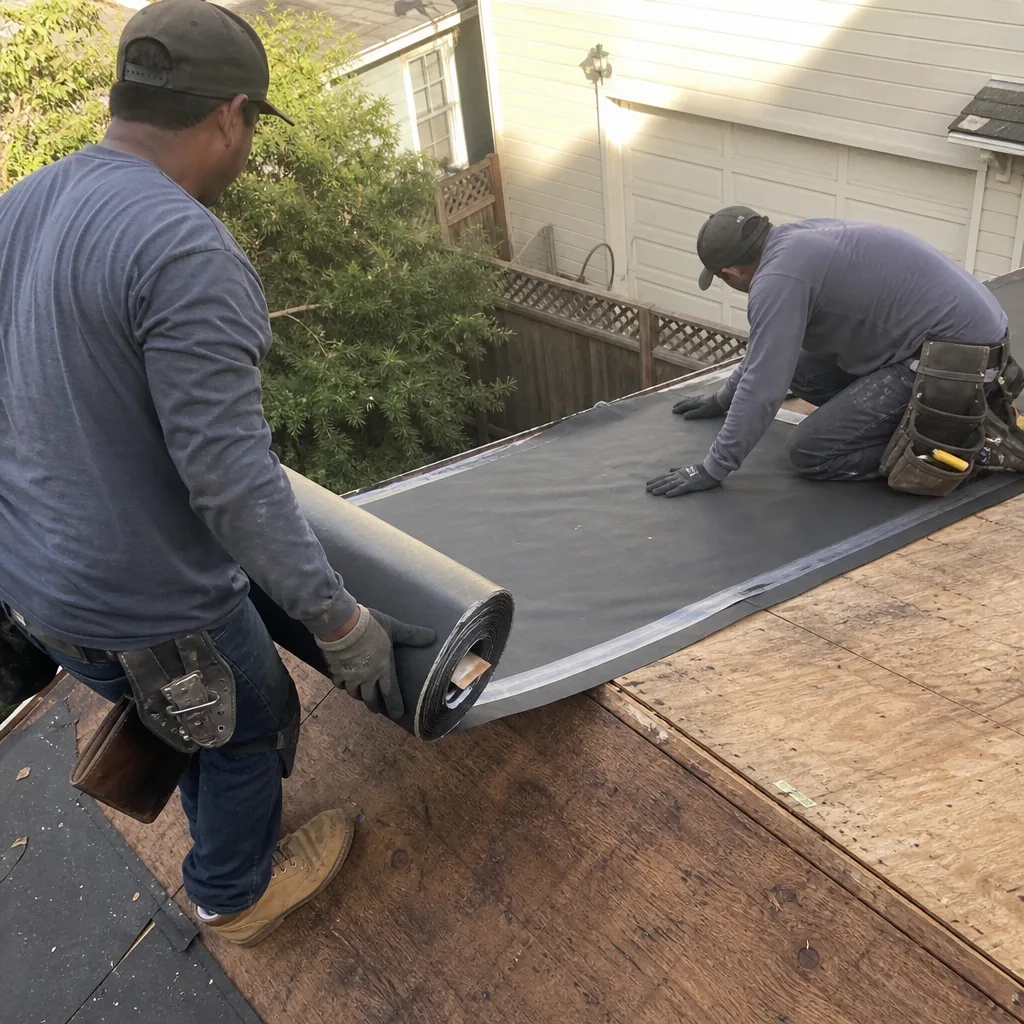
Why October matters specifically in San Francisco: The city’s deciduous trees (mostly street-planted maples, liquidambars, and ornamental pears) drop their leaves in October and early November. Those leaves land on roofs, wash into gutters and internal drains, and form a mat that traps the first real rains. On flat and low-slope roofs, which cover a large share of San Francisco homes built before 1950, clogged internal drains mean standing water. Standing water means membrane saturation. Membrane saturation means leaks that show up in ceilings three weeks later.
Here’s the October checklist that prevents most winter problems:
- Clear all gutters, downspouts, and internal roof drains. On flat roofs, internal drains are often hidden under leaf debris. If you’re comfortable on a ladder, remove the debris by hand and run a hose to confirm water flows freely. If you’re not comfortable, this is a quick professional visit.
- Inspect flashing around chimneys, skylights, plumbing vents, and roof-to-wall intersections. Flashing is the metal material that waterproofs the joints and transitions. In San Francisco’s salt air, galvanized flashing corrodes faster than most homeowners expect. Look for rust streaks, lifted edges, or separated sealant.
- Check the roof surface for cracked or missing shingles, and for tiles that have slipped. October’s mild weather makes repairs easy before rains make everything slippery.
- Trim branches that overhang the roof. Anything rubbing against shingles during winter winds will accelerate wear and drop more debris onto the roof.
- Test the downspout discharge. Make sure water exits at least three feet from the foundation. Saturated soil against a San Francisco hillside foundation creates its own set of problems.
If you do one thing this month, make it drain clearing plus a flashing check. Most residential roof repair calls we get between January and March start with “water came through the ceiling,” and the root cause is usually found at a flashing point that failed quietly months earlier. A roof repair in San Francisco done in October typically costs less than one done in January, because problems are smaller and materials haven’t been soaked.
June – August Fog Season: Algae, Condensation, and Why It’s the Best Time for Most Repairs
Here’s what most San Francisco homeowners don’t realize: the fog season is doing more to your roof than many winter storms do. Every morning from June through August, the marine layer rolls in and leaves a film of moisture on roof surfaces. It sits there for hours. Then it burns off. Then it returns the next morning. This cycle repeats 60 to 90 times in a typical summer.
That repeated moisture cycle creates two distinct problems:
Algae and moss growth. The dark streaks you see on asphalt shingle roofs, especially on north-facing slopes in neighborhoods like the Inner Sunset or Cole Valley, are almost always algae. It feeds on the limestone filler used in shingle manufacturing and thrives in the exact conditions San Francisco produces all summer. Algae doesn’t immediately destroy a roof, but it traps moisture against the shingle surface, which accelerates granule loss and shortens the roof’s effective life. Moss, which grows in thicker patches on shaded roofs, is worse because it actively lifts shingle edges and invites water underneath.
Attic condensation. San Francisco’s summer fog creates a less obvious problem inside the attic. Warm interior air rises, meets the cooler roof deck chilled by foggy mornings, and condenses. Homeowners often mistake this for a roof leak when they see water stains on attic sheathing during the dry months. The fix is usually ventilation, not roofing, but it takes a trained eye to tell the difference.
The practical tasks for fog season:
- Apply an algae inhibitor in late May or early June. Products containing zinc or copper compounds, applied correctly, prevent algae from establishing during the fog months. This is a preventative step that costs a fraction of what algae-related shingle replacement costs later.
- Check attic ventilation during June, July, and August. Look for signs of condensation on nails, on the underside of the roof deck, or on insulation touching the sheathing. If you see moisture, improve ventilation before winter traps more warm air inside.
- Schedule repairs during fog season. This is counterintuitive but practical: June through August is the best time for most roof repairs in San Francisco because there’s almost no rain, and crews can work safely on dry (or slightly damp, not wet) surfaces. The fog doesn’t stop roofing work the way rain does. Summer is also when many San Francisco families travel, making it easier to schedule work while the house is quiet.
We work with algae-resistant shingle products from GAF and CertainTeed that hold up particularly well in San Francisco’s fog belt. If you’re considering replacement, ask about these materials specifically. If replacement isn’t in the cards this year, a professional algae treatment in June is the next best thing.
February Wind Events: What to Check After a Pacific Storm
February is San Francisco’s windiest month. The Pacific fronts that sweep through during this period bring sustained onshore winds that routinely gust 30 to 40 miles per hour, with stronger gusts in exposed areas like the Outer Sunset, Ocean Beach, Twin Peaks, and hilltop locations throughout the city. After a significant wind event, a quick roof check is worth your time.
Here’s what to look for, and what actually matters:
- Lifted or curling shingle edges. Wind gets under the exposed edge of a shingle and works it loose. A shingle that’s still attached but lifted creates a path for the next rain.
- Granules in the gutter. Some granule loss is normal, especially on an older roof. A light dusting of granules in the gutter after a windy stretch is cosmetic. A heavy accumulation, or bare asphalt showing through on the roof surface, means the shingles are nearing replacement age.
- Flashing that’s pulled away from the wall or chimney. This is the highest-risk wind damage because it’s invisible from the ground and lets water directly into the structure. Check flashing after any storm with gusts over 35 miles per hour.
- Displaced tiles on tile roofs. A single slipped tile exposes the underlayment and creates a water path. Tile roofs are common in San Francisco’s older neighborhoods, and they need a professional’s hands to reset properly.
- Debris on the roof. Wind carries branches, leaves, and neighborhood debris onto roofs. Anything sitting on the roof surface holds moisture and blocks drainage.
The difference between cosmetic granule loss and structural damage comes down to one question: can you see bare asphalt or exposed underlayment anywhere? If yes, call a roofer. If it’s just a little extra grit in the gutter and the shingles look intact, note it and check again in a few months. If you’re not comfortable getting on a ladder, this is a good time to have a professional do a visual inspection. We tell our customers in San Francisco that a February inspection costs less than the interior repair bill from a leak that goes unnoticed until March.
April – May: The Narrow Dry Window for Full Roof Replacement
If you’re planning a full roof replacement in San Francisco, check out The Complete Guide to Roofing in San Francisco to understand your options, and note that the window that matters runs roughly from mid-April through late May. Some years it extends into early June. In other years, the rain lingers into April and the window shrinks. Contractors who work in San Francisco know this window well and book accordingly.
Why this window matters:
- Rain risk drops sharply after mid-April. A full tear-off leaves your home vulnerable for one to three days. Doing that in March means gambling with an unexpected downpour. Doing it in April or May means working under clear skies with predictable conditions.
- Wind is calmer than February and March. Tear-off work plus high wind equals debris in your neighbor’s yard and materials not staying where the crew puts them. April and May are calmer.
- Temperatures are ideal for shingle installation. Asphalt shingles need warmth to seal properly, but extreme heat makes them too soft to walk on. San Francisco’s April and May temperatures, typically in the 60s and low 70s, sit in the perfect range.
- Fog season hasn’t fully arrived. While the fog returns in June, April and May mornings are generally clearer, which helps adhesives and sealants cure properly.
- Suppliers have stock. By summer, roofing material demand spikes across the Bay Area, and certain colors or product lines can take longer to arrive. Ordering in April means better availability.
Materials we regularly install in San Francisco include Owens Corning and CertainTeed asphalt shingles, along with tile and metal systems from other manufacturers where the architecture calls for it. San Francisco’s mix of Victorian, Edwardian, mid-century, and modern homes means no single material fits every roof. A home in the Mission with a flat or low-slope roof needs a different system than a Richmond district house with a steep gable.
If a full replacement is on your horizon, start planning in February. Contractors in San Francisco need lead time for permits, material orders, and crew scheduling. April jobs get booked in February and March. Waiting until May to start planning often means the window has closed and you’re looking at late summer or fall dates.
For a full picture of what replacement involves and what it costs, see our guide to roofing company services in San Francisco.
The 10-Minute Attic Walk-Through: A Once-Per-Season Habit
The cheapest roofing maintenance in San Francisco doesn’t happen on the roof at all. It happens inside, in the attic, and it takes about ten minutes. The goal is to catch problems before they become visible from the living room. By the time you see a ceiling stain, the leak has been working for weeks or months.
Here’s the once-per-season checklist any homeowner can do:
- Bring a flashlight and go into the attic during daylight hours. Turn off the flashlight for a moment and look for any light penetration through the roof deck. Pinpoints of light mean holes where water can enter.
- Check the underside of the roof deck for moisture or dark stains. In San Francisco’s fog season, condensation can look like a leak. In winter, active leaks show as damp, dark areas. Either way, moisture in the attic needs to be addressed.
- Feel the insulation. Damp insulation loses its R-value and promotes mold. It should feel dry and fluffy, not clumped or wet. Pay attention to areas under roof penetrations like vents and chimneys.
- Look for mold or mildew on exposed wood surfaces. San Francisco’s marine air makes attics prone to mold when ventilation is inadequate. Black or green patches on sheathing or rafters are a sign that humid air isn’t escaping.
- Check the ventilation. You should see clear paths for air to enter at the eaves and exit near the ridge. Blocked vents, especially in older San Francisco homes where insulation was added later and pushed into the eaves, are a common cause of condensation problems.
- Scan for animal activity. Raccoons, rats, squirrels, and birds all find their way into San Francisco attics. Look for droppings, nesting material, or chewed wiring. Any opening an animal used is an opening water can use.
Do this four times a year: once in October before the rains, once in January during the peak of the wet season, once in April as the dry window opens, and once in July during the height of fog season. Ten minutes, four times a year, catches most problems early.
Common Mistakes to Avoid
- Following a national roofing calendar instead of San Francisco’s actual climate. Advice written for Wisconsin or Texas doesn’t map to the fog belt. If a guide tells you to “winterize” your roof in September, it wasn’t written for San Francisco. October is your month.
- Ignoring fog-season algae because “it’s just cosmetic.” That dark streaking on north-facing slopes in the Sunset or Richmond is slowly degrading the shingle surface. A June algae treatment costs far less than replacing shingles that fail early because of it.
- Skipping the October flashing check. Most winter leaks in San Francisco start at flashing points, not at obvious holes in the roof. Flashing failures are quiet and slow, and they’re almost always caught by a visual inspection before the rains start.
- Assuming attic water stains in July mean a roof leak. San Francisco’s fog-season condensation is often mistaken for leak damage. The fix may be ventilation, not roofing. Get an expert assessment before replacing a roof that doesn’t need replacing.
- Waiting until May to plan a re-roof. The dry window is short and contractors book fast. If you want an April or May installation, you need to start the process in February. Waiting until May often means the job moves to fall.
- Climbing onto a wet roof to check things personally. Roofs in the fog season can be slick even when they look dry. If you’re not certain about safety, have someone else do the inspection. Falls from roofs cause serious, lasting injuries.
- Hiring a crew without knowing what will happen inside the home. A roof job touches more than the roof: ladders against walls, debris falling around the foundation, workers walking through the house. You want a written plan for how the property will be protected, including your floors, landscaping, and any pets inside while work happens.
When to Call a Professional
Some roof work is safe and reasonable to do yourself: gutter clearing from a stable ladder, visual checks from the ground, attic walk-throughs. Other situations call for professional eyes and hands. Read our DIY vs Professional Roofing: The San Francisco Homeowner’s Decision Guide to help decide which path fits your situation. Call a roofer if you see active water entry, sagging roof areas, multiple missing or cracked shingles, flashing that has separated from walls or chimneys, or any sign of structural movement. Tile roofs and steep-slope roofs should always be handled by trained professionals given the fall risk. If you suspect condensation rather than a leak, a professional assessment will save you from paying for a repair you don’t need.
Birchbark Roofing San Francisco offers free estimates throughout San Francisco. Call (831) 228-3330 and a live person will answer, day or night.
Frequently Asked Questions
Most seasonal roof maintenance visits in San Francisco, including drain clearing, flashing inspection, and a visual roof check, run between $250 and $600 depending on roof size and accessibility. You’ll see your exact number in writing before any work starts. Call (831) 228-3330 for a free estimate.
October is the most important inspection month in San Francisco because it’s the last chance to catch problems before the winter rain season begins. A secondary inspection in February after the wind season also makes sense. Both checks together cover the two main damage patterns the city’s climate produces.
Those dark streaks are almost always algae feeding on the limestone in your shingles, and San Francisco’s fog season creates the perfect growing conditions from June through August. North-facing slopes and homes on the city’s west side get the worst of it. Algae inhibitor treatment in late May or early June prevents most of this growth.
Yes. Fog doesn’t prevent roofing work the way rain does, and June through August is actually a good time to schedule repairs in San Francisco because precipitation is minimal. The only caveat is that soft roofing materials like certain single-ply membranes need dry conditions to form proper seams.
Condensation appears as widespread, even moisture across large areas of the roof deck, while leaks show as localized dark staining around penetrations like vents, chimneys, or valley intersections. Condensation typically worsens in summer fog season. A professional can confirm which problem you have in one visit.
The best time for a full roof replacement in San Francisco is mid-April through late May, when rain has stopped, winds have calmed, and temperatures sit in the ideal range for shingle installation. Plan ahead: contractors book April and May jobs in February and March. Call (831) 228-3330 to schedule a free estimate before the window fills.
The Bottom Line
San Francisco’s roofing calendar runs on its own schedule. Clear drains and check flashing in October. Treat algae and monitor attic moisture through the fog season. Check for wind damage after February storms. Schedule major work during the April-May dry window, and book it months ahead. The ten-minute attic walk-through four times a year catches nearly everything else early. None of this is particularly difficult, but each task is easy to skip, and the cost of skipping it shows up as interior water damage during the next rainy season. Do the small things on schedule, and your roof will last the way it should in this city’s unique climate.
Written by Erik Lindgren, Owner at Birchbark Roofing San Francisco, serving San Francisco since 2000.
See the difference
 Before
 After
After Before
 After
After Before
 After
After